

Health Department staff identify trends in Lyme disease, ehrlichiosis and other tickborne diseases through reports received annually from physicians and laboratories. These reports assure that the Health Department has an accurate picture of Lyme disease and other tickborne diseases in the county.
Other tickborne diseases, including ehrlichiosis, anaplasmosis, babesiosis, Powassan/Deer Tick Virus and Borrelia miyamotoi, continue to spread in Westchester County. Education, prevention of tick bites and recognition and treatment of early signs and symptoms remain our best weapon in the battle against tickborne diseases.
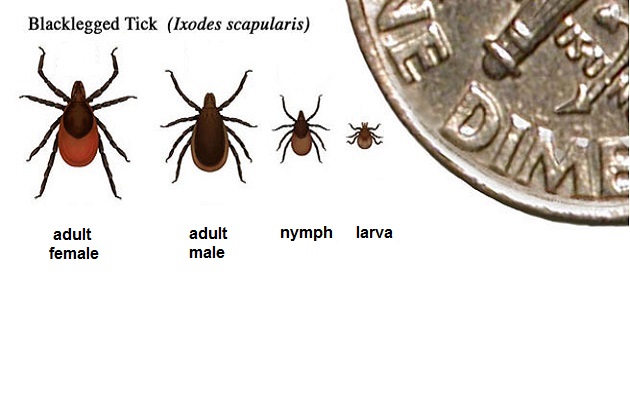
The Lyme disease bacterium, Borrelia burgdorferi, is spread through the bite of infected ticks. The blacklegged tick (or deer tick, Ixodes scapularis) spreads the disease in the northeastern, mid-Atlantic, and north-central United States. The western blacklegged tick (Ixodes pacificus) spreads the disease on the Pacific Coast. Ixodes ticks are much smaller than common dog and cattle ticks. In their larval and nymphal stages, they are no bigger than a pinhead.
Ticks feed by inserting their mouths into the skin of a host and slowly taking in blood. Ixodes ticks are most likely to transmit infection after feeding for 36 to 48 hours. Ticks generally need to be attached for at least 24 hours before they can pass along infections such as Lyme disease, but are capable of transmitting some infections when attached for shorter periods of time. For this reason, you should bathe or shower as soon as possible after coming indoors (preferably within two hours) to wash off and more easily find ticks that are crawling on you. You can also tumble dry clothes in a dryer on high heat for 10 minutes to kill ticks on dry clothing after you come indoors.
In addition, preventive measures such as the use of insect repellents, protective clothing, daily tick checks and proper tick removal are also necessary to prevent tickborne diseases.
Tickborne Disease Education and Resources